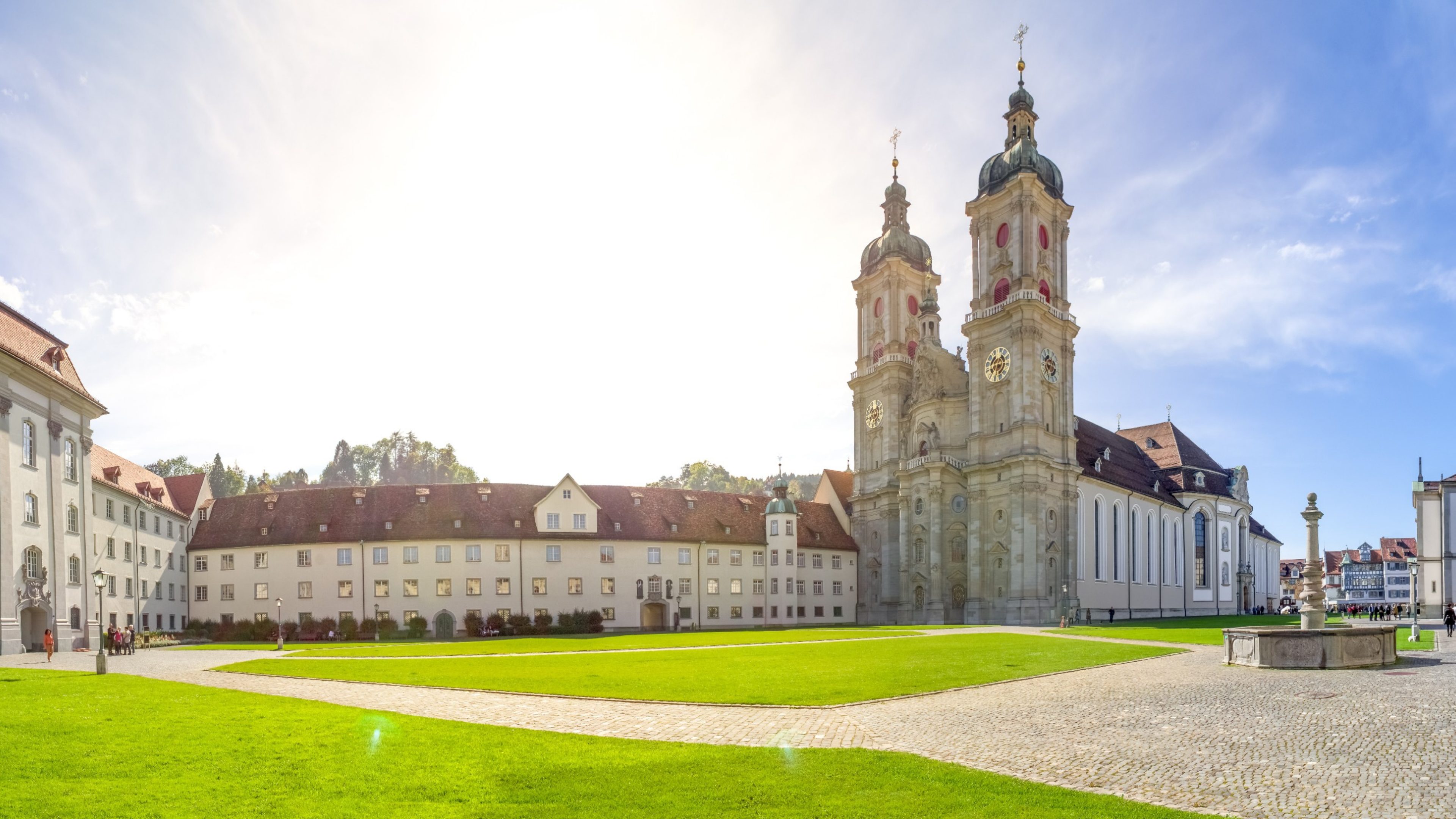

The property at Multergasse 11 was extensively renovated two years ago and is now fully let. It is located just a few minutes’ walk from St. Gallen’s main station.
Extensively renovated and revitalised – this is how the building at Multergasse 11 in the heart of St. Gallen’s old town looks today.
What does the name Multergasse mean? Nobody is exactly sure. It probably refers back to “Muelt,” which means something like a baking trough. Multergasse would thus have been the bakers’ alley.1 In any case, as early as the Middle Ages it was an important traffic axis leading from Multertor to the market place.
Today it is one of the busiest shopping streets in the old town, lined with a variety of shops and cafés with outside seating in the summer. The footfall here is one of the highest in the city.
Complete revitalisation and new usage concept
The current building at Multergasse 11 dates from the 1960s and was completely renovated both inside and out two years ago. The usage has also been fully redesigned.
In the attic, which used to serve as a storage room, four small apartments have been created that each have their own access to a separate seating area in the atrium. The roof terrace, with views over the rooftops of St. Gallen and the surrounding hills, can be shared by everyone.
Retail and office spaces
The main components for the basic fit-out of the retail and office spaces were defined during the renovation. These included the staircase and the imposing entrance areas, as well as modern, enhanced sanitary facilities on each floor.
In order to meet the current demands of tenants, showers for employees have been installed on two floors. The renovation of the ventilation and cooling systems was also part of the basic fit-out. The pipes lead to the different floors individually, so that tenants can ventilate and air-condition their spaces or rooms as they wish and in a self-determined manner. As a result, it was possible to let the retail and office spaces in their unfinished state.
This clever reorientation has succeeded in attracting well-known and respected tenants for the space. On the ground floor and the first basement level, the clothing and fashion company PKZ MEN presents its men’s collection. An ophthalmologist’s practice takes up two further floors, while a service provider uses the third floor as office space.
The property at Multergasse 11 is a very good example of how modern revitalisation combined with an optimum reorientation and the involvement of tenants can achieve the desired full occupancy rate.
1 Martin Arnet: Die Orts- und Flurnamen der Stadt St. Gallen; 1990
More articles on selected real estate investments can be found in our Magazine “Exposé”.
Find out more here about the real estate use classes in which Swiss Life Asset Managers is invested.