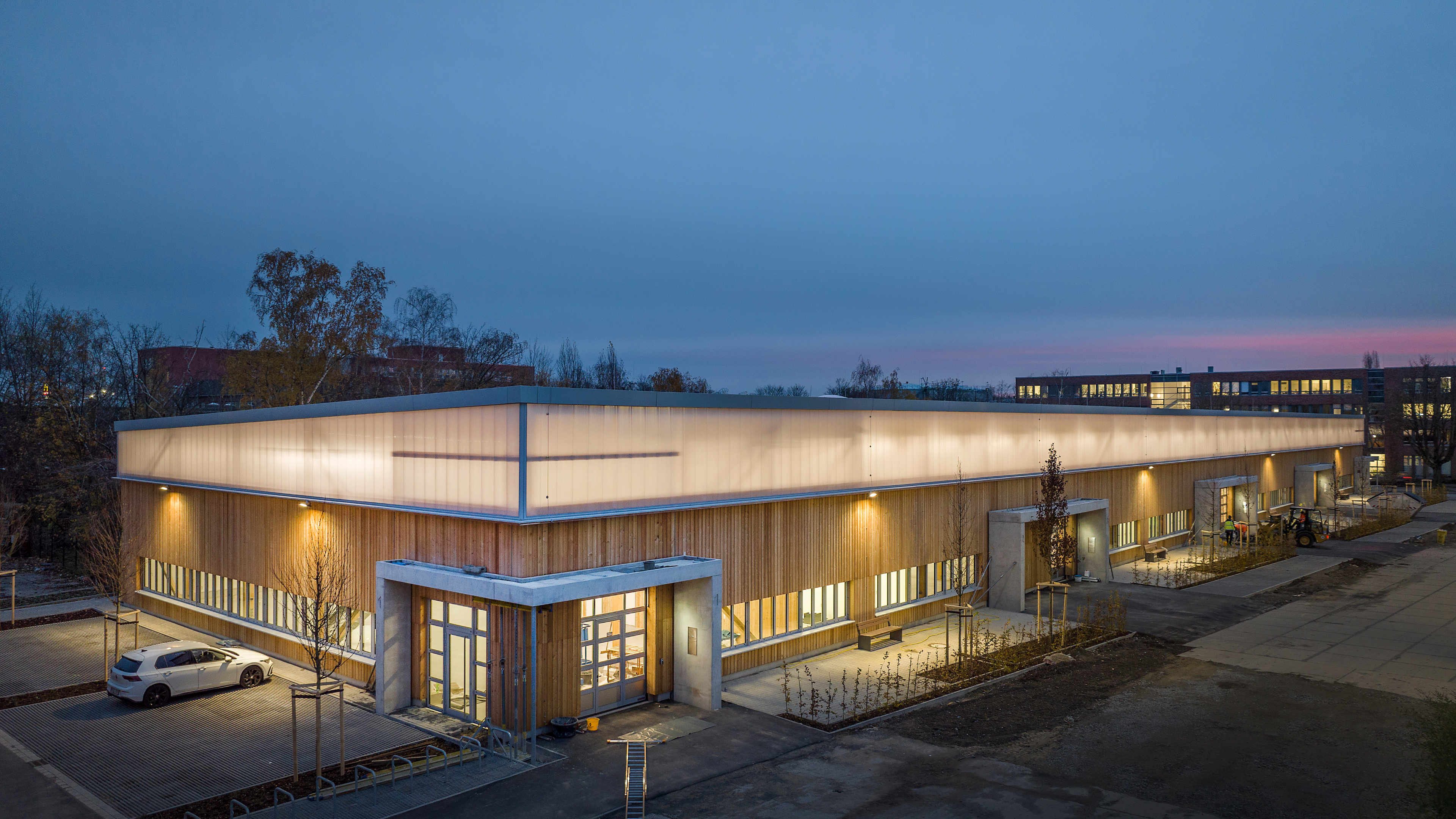


The growing awareness of environmental impact, social responsibility and effective corporate governance – ESG for short – has become an integral part of corporate strategies and investment decisions. The Werkhalle Rheinhöfe in Düsseldorf, developed by BEOS and Swiss Life Asset Managers Germany, is an example of this.
The Werkhalle is part of the Rheinhöfe industrial park in the south of Düsseldorf and looks back on more than a century-old tradition as an industrial location. The partially preserved crane construction halls are witnesses to this. The 38 700 m2 site currently offers 23 200 m2 of total rental space. In the various buildings, just under 15 920 m2 are used as service, leisure and event space and just under 5580 m2 as office space. The site also has 700 m2 of wholesale space and 4850 m2 of factory and storage space. This is where the Werkhalle Rheinhöfe, which was completed at the end of 2023, is located.
Flexible-use units
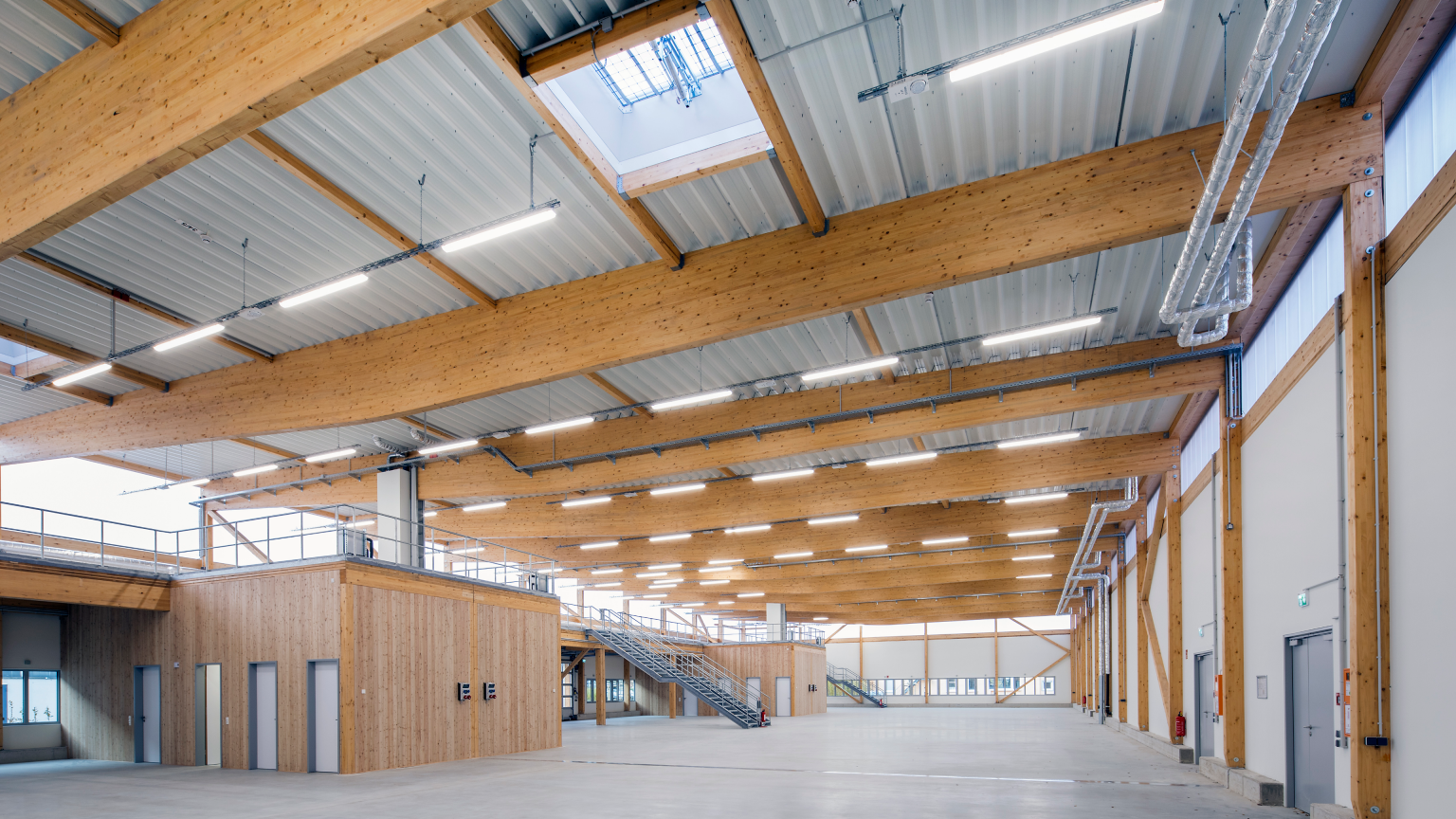
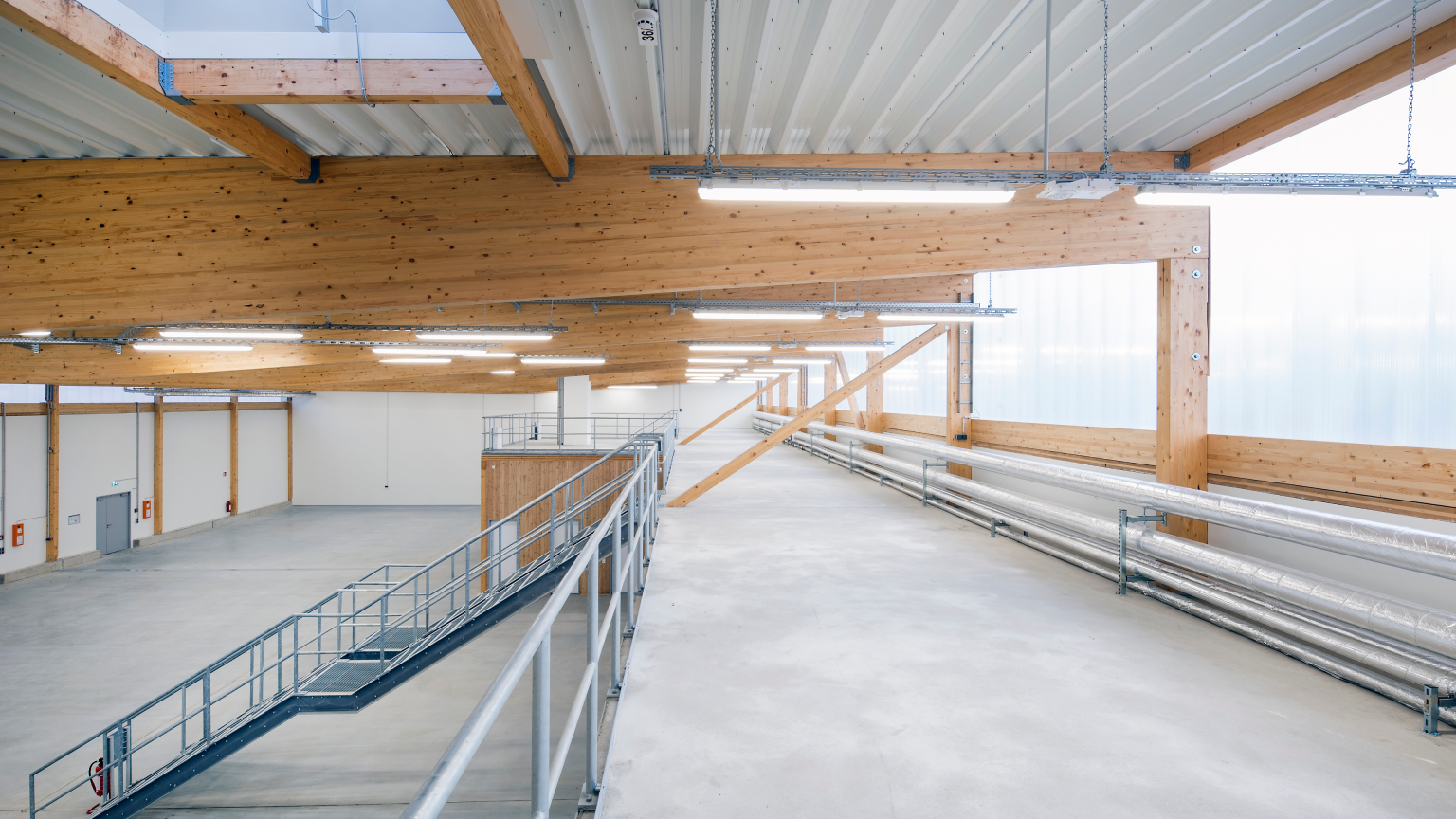
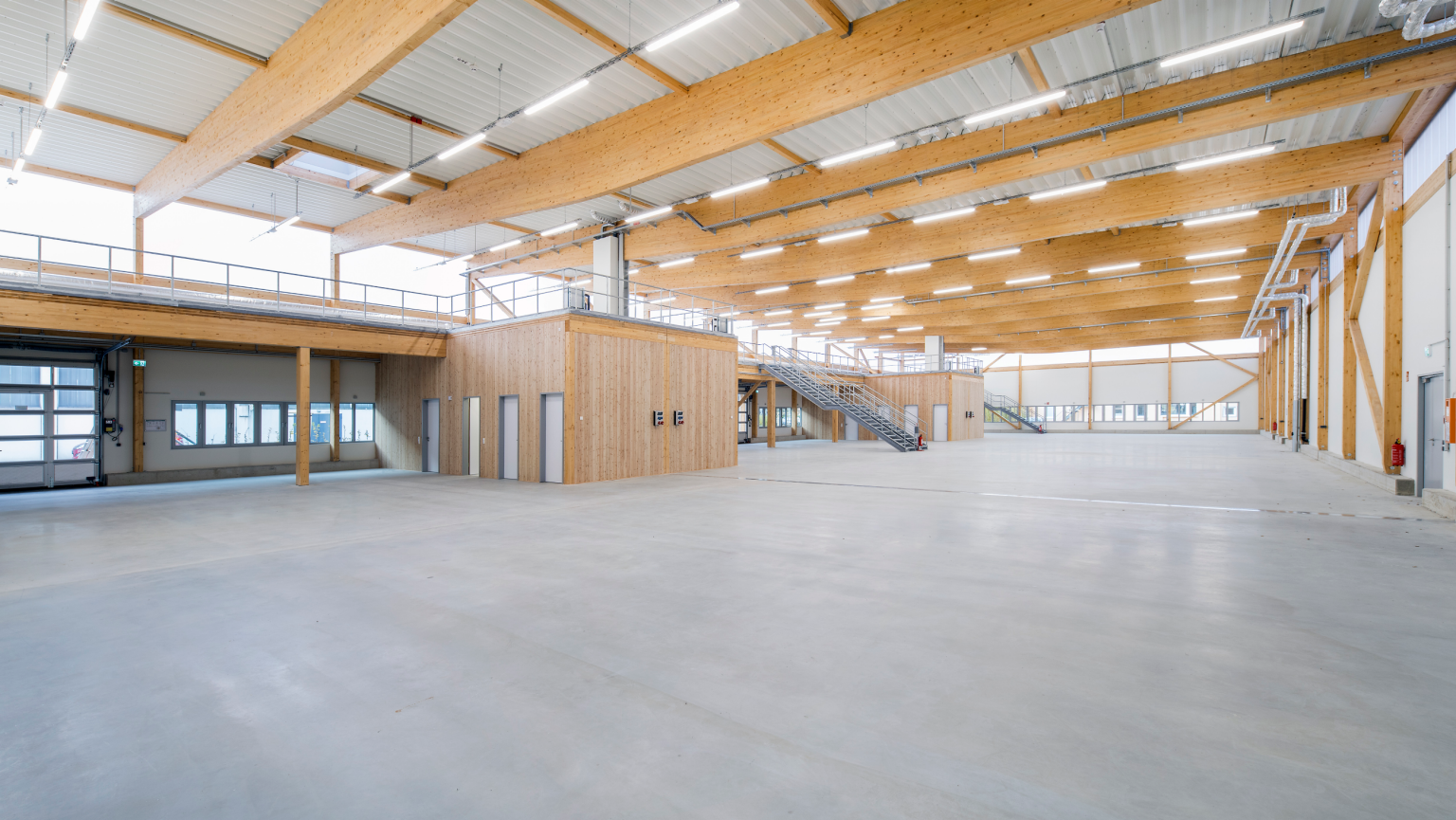
The Werkhalle has a gross floor area of 3700 m2 and enables up to eight commercial tenants to build highly flexible, self-sufficient rental units with no disruptive internal supports that meet the highest standards in terms of design, function, lighting, overall experience and sustainability. Individual units can be combined or separated with little structural and technical effort. The Werkhalle is thus an ideal commercial space for production, trades, warehouses, showrooms or laboratories. It is characterised by modern and generous windows as well as a continuous row of polycarbonate windows and bright, timeless wooden facades. The interior is also high-quality and sustainable.
Efficient heating and cooling system
The intelligent and efficient heating technology of the Werkhalle deserves a special mention: for the heat supply in the hall and the offices, a monovalent, i.e. 100% air-to-water heat pump is used, which extracts heat from the outside air and is therefore 100% regenerative. In summer, this system also enables additional cooling throughout the entire building. In addition to the resource-independent supply, the heating and cooling system contributes significantly to the high level of user comfort. The office spaces can also be heated by the circulating air cooling units. Underfloor heating has been installed on the mezzanine level, which can be controlled separately and also has a cooling function.
Planting and PV systems in outdoor areas
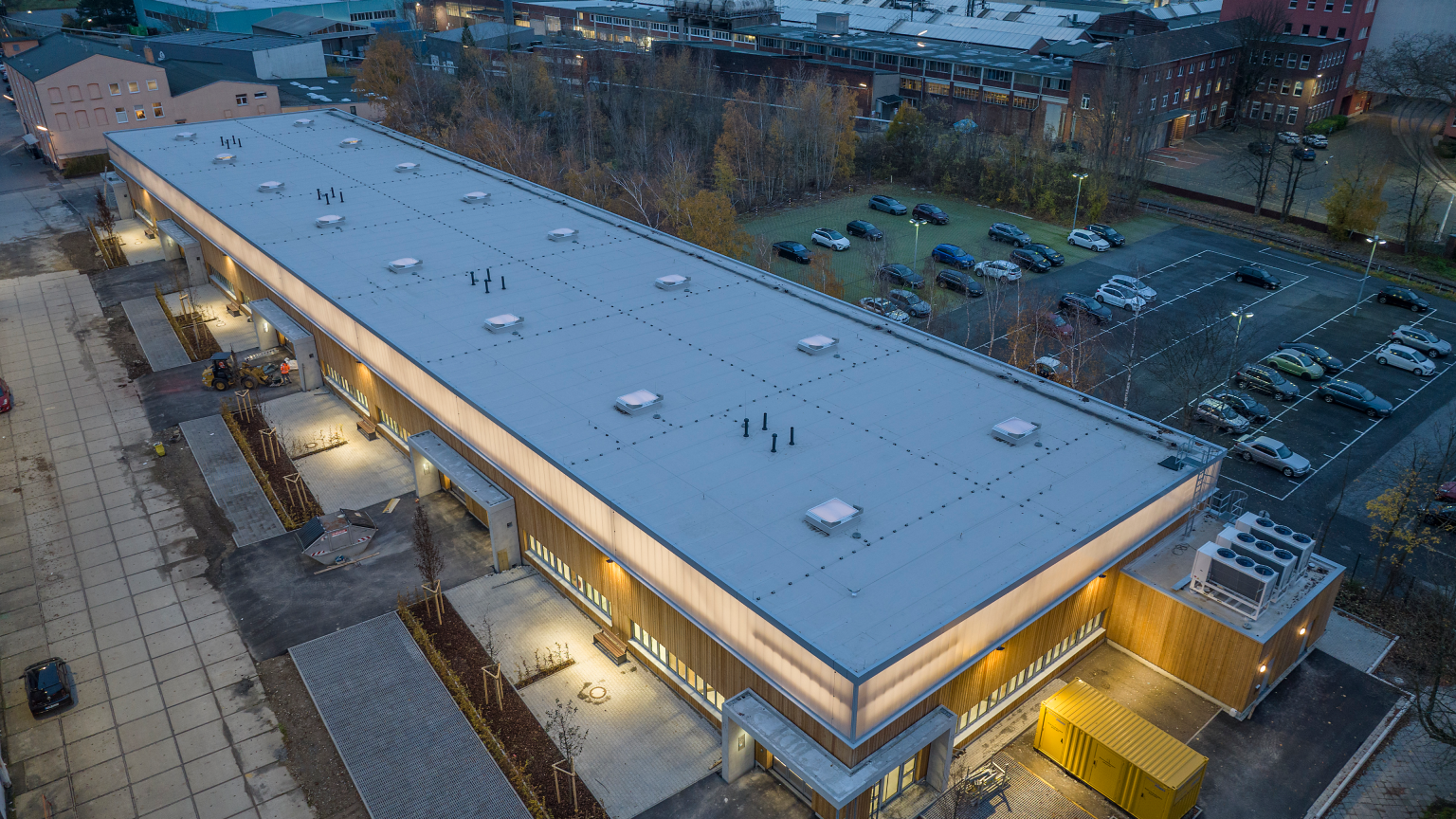
The entire area of the industrial park is characterised by an appealing exterior design. Terraced areas with plant beds and hedges are located in front of the building and can be used for a variety of purposes such as breaks, events or the presentation of exhibits.
The full-surface PV system on the roof has a total output of up to 370 kWp. When the Werkhalle is in regular operation, it generates more electricity than is actually required in combination with the optimised building shell and the highly efficient heat supply. However, the surplus electricity is to be fed back into the building circuit and offered to the tenants so that the electricity is consumed in and around the building as far as possible.
The roads are asphalted or paved, while the terraces, parking spaces and paths have been designed with percolable paving or slabs. In addition, 16 new trees have been planted and more than 270 hedge plants are planned. On the new building plot there are 23 parking spaces available, some of which are extra-long. All car parks can be equipped with electric charging stations or retrofitted if necessary. There are also parking spaces for 18 bicycles.
Sustainability
From the outset, the topic of sustainability and conservation of resources played a central role in the design of the facility. Nor should the new building entail any additional ground sealing. The building site was originally used as a car park; the recycled material obtained during the dismantling was reused in an appropriate manner. Most of the timber support structures in the interior were screwed reversibly, so that they can be used again at another location. In addition, a building material passport was drawn up so that the individual components can be identified and reused in the future. The property is generally characterised by a high proportion of wood-based materials, i.e. renewable raw materials.
The Werkhalle has been registered for certification by the German Sustainable Building Council (DGNB); the target is the Gold standard. The new building also meets the requirements of the efficiency building standard KfW EG 55. Sustainability criteria were always taken into account when drawing up the energy concept and selecting the building materials. According to the DGNB's accounting methods, the Werkhalle is climate-positive both in operation and throughout its entire life cycle.
The Werkhalle Rheinhöfe receives the B!WRD Project Developer Award
The B!WRD gala organised by the Federal Association of Free Real Estate and Housing Companies (BFW) in Berlin in November 2023 focused on a number of outstanding project developments. The B!WRD Award was awarded to medium-sized real estate companies that set standards for innovative and sustainable real estate projects. The award-winning companies also included Swiss Life Asset Managers and BEOS. For the Werkhalle Rheinhöfe, which impressed with its mix of flexibility, modernity and sustainability, they received the BFW Project Developer Award in the “Commercial” category. This award further underscores that the Werkhalle is a showcase project in the real estate portfolio of Swiss Life Asset Managers Germany.
Source of pictures: Hartmann Architekten and Holger Knauf, photographer
Leander Frank, Communications Manager, Swiss Life Asset Managers Germany
You can find more information about the project Rheinhöfe on its website.