Flexible working will remain part of the new normal after the Covid-19 pandemic: employees will be able to decide where and when they work. This will lead to demand for office space at new locations. Investors who can offer suitable space in underserviced locations with growing demand can expect strong performance.
Another impact of the pandemic is a change in where knowledge-based work is done. The increase in working from home due to mandated office closures has clearly shown that such work does not need to be restricted to an office.
Pros and cons of working from home
Employees particularly enjoy the convenience and not having to commute when working from home. Companies save costs if they have to rent less office space. However, working from home is not without its downsides:
- While online networking is entirely feasible, it is harder to make new contacts working from home.
- There are concerns related to the well-being and mental health of employees.
- Offices often offer employees with small apartments or young families a better working environment.
- It’s hard to train new employees working from home.
- Collaboration, creativity and information flow less freely.
- Employees miss the social aspect, team spirit and camaraderie.
Surveys show that most employees wish to spend a lot of their working back in the office once it becomes possible again.
Working from home can complement the office in a flexible way
The trend towards self-determined, flexible working was already evident pre-pandemic. That means employees decide for themselves when and where they do their work. In future, therefore, they will tend to go to the office less for tasks that they can also complete from home. Such tasks include reading reports or sending e-mails. They can commute to the office when necessary to collaborate with other employees, for training, creative tasks and similar activities as well as for social reasons.
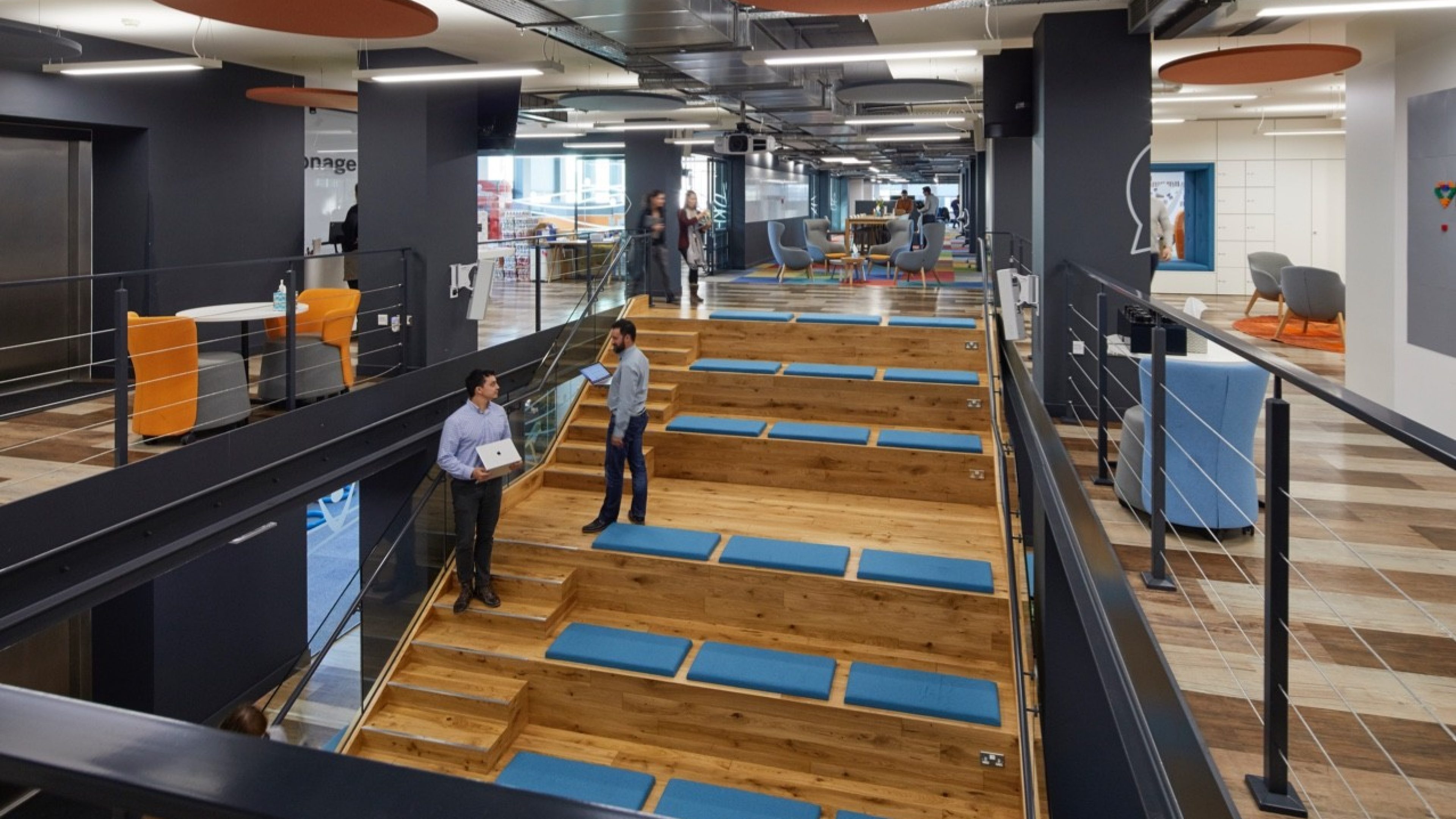
In response to these new requirements, employers will rent space that meets these needs. These spaces are easily accessible and motivate employees with their attractive layout.
New office space requirements
It is to be expected that employers will offer their employees flexible options in the future with new locations supplementing the head office. Having somewhere local will provide the advantages of an office without long commuting times. This model, known as "Hub, Home & Roam," means demand will rise for flexible offerings located near to where employees live. To date, such space has been scarce or even absent in many UK submarkets.
In future, employers are expected to also consider how the location impacts employee productivity and satisfaction when selecting office space to rent. At the same time, they will be more flexible in terms of factors such as size or location. This strengthens their negotiating position: now it is up to the landlord to convince potential tenants about the property. This entails a higher earnings risk. On the other hand, lower vacancies and higher rental income are attractive.
These trends already existed prior to the Covid-19 pandemic but have been brought more to the fore by the pandemic. A value-added strategy is advisable in this situation: to offer unique properties for renovation as offices in underserviced locations that will benefit from flexible working.
First published in Insights March 2021
Authors: Tom Duncan, Senior Associate - Research, Strategy and Risk, Mayfair Capital