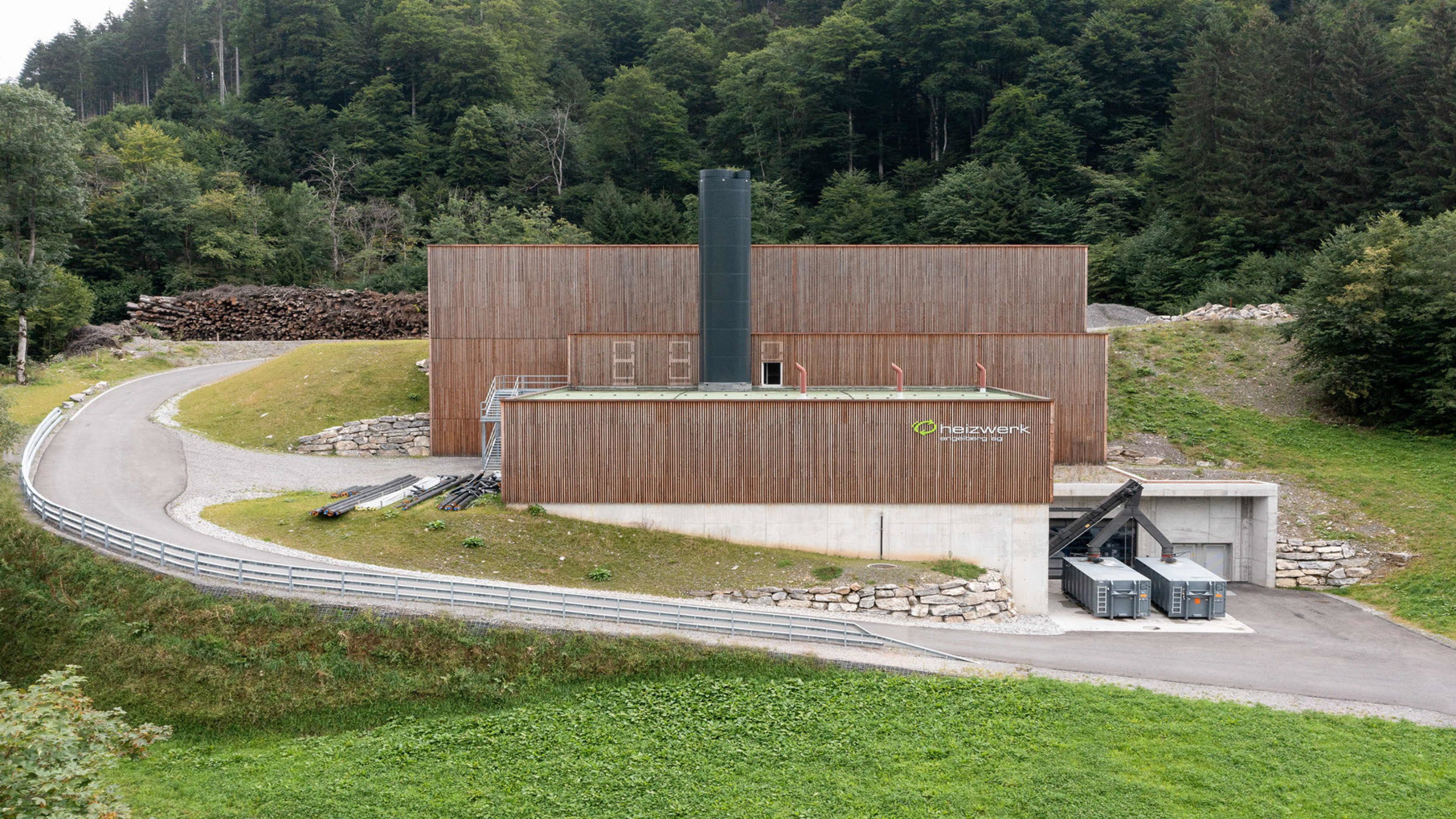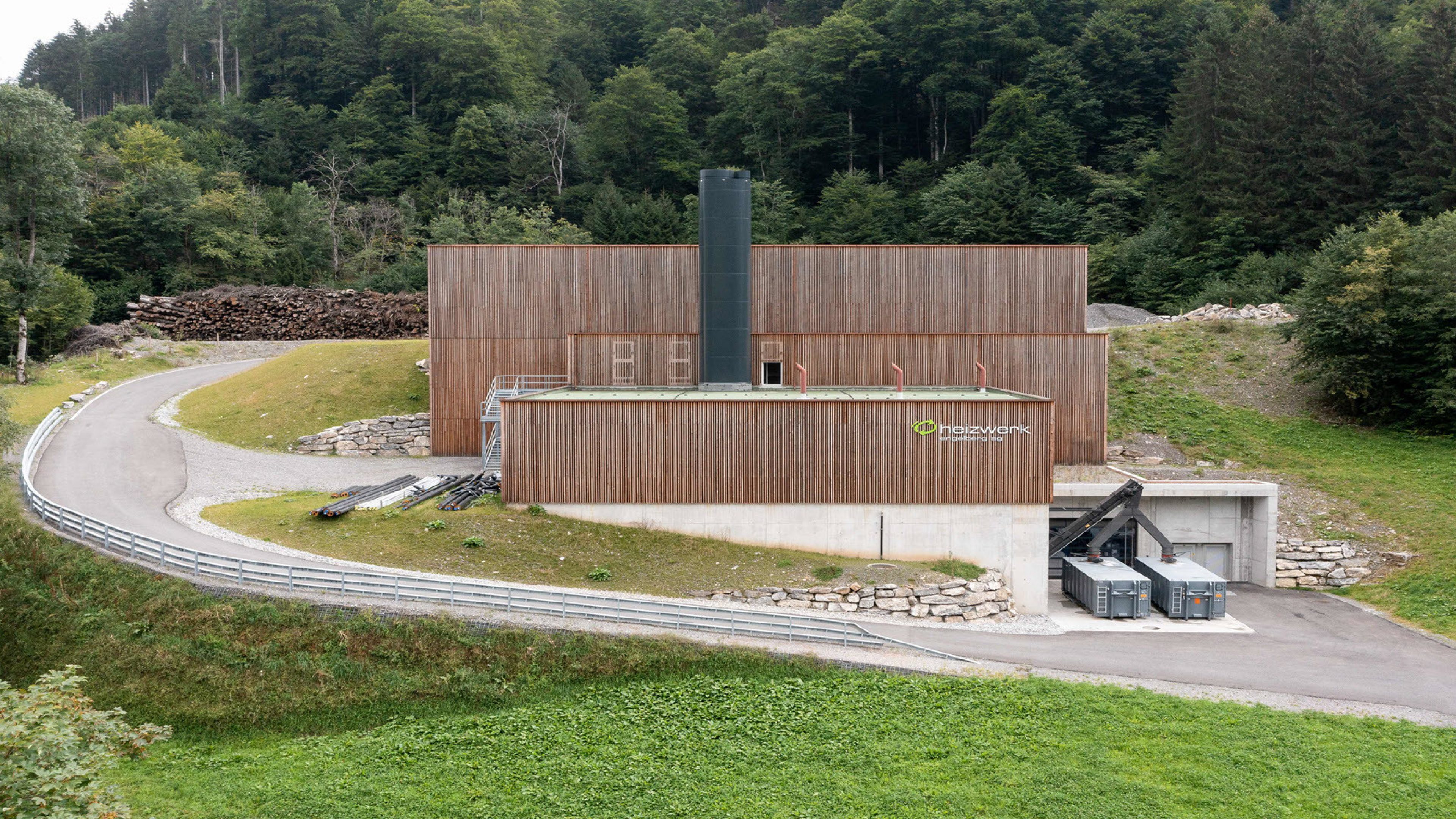


In Engelberg, sustainable energy is not a distant vision, but a lived reality. Heizwerk Engelberg delivers district heating, replacing fossil fuels with renewable local energy. Having been awarded the Energiestadt¹ label since 2011, the municipality continues to lead by example.
Since the 2019/2020 winter season, Engelberg has increasingly transitioned from fossil fuels to renewable district heating based on locally sourced wood chips. Heizwerk Engelberg has generated around 17.9 gigawatt-hours of heat last year supplying up to 60% of Engelberg’s households and local businesses with renewable energy, which amounts to 195 customers today2.
By replacing individual oil-fired boilers with a central wood-chip boiler, the heating network significantly reduces CO₂ emissions. This directly supports Switzerland’s net zero target and aligns with the national guidance that district heating is a key enabler of decarbonisation under the Energy Strategy 2050. The use of Engelberg forest wood follows a sustainable forestry regime for the local community, ensuring that biomass extraction remains ecologically sound and sustainable.
Engelberg’s transformation illustrates how sustainable infrastructure can create not only environmental benefits but also social value for a rural mountain community, directly strengthening regional economic resilience.
Social value and strong public acceptance
Sustainable infrastructure projects in rural communities succeed only with broad support. In Engelberg, local authorities have demonstrated a strong commitment to the heating network and openly support its expansion. The project’s integration into long-term community planning has reinforced trust and ensures continuous alignment with local needs.
The project team’s and the investor’s aim has always been to involve the local community throughout both the permitting and construction phases. Thanks to this close collaboration, no objections were raised to the construction permits, either by the authorities or by the public.
A project with significant local economic benefits
The initiative has further created employment opportunities through plant operation, maintenance, forestry supply chains, and the construction and expansion of the network. The appointment of Josef Infanger, a respected local figure, as Chairman of the Board of Directors has contributed significantly to this.
The value‑creation analysis shows that Engelberg itself benefited directly by around CHF 10.8 million, representing 37% of total project spending. An additional 37% was retained within the wider Central Switzerland region3. This high share of capital that was deployed locally demonstrates how the project stimulates the local economy instead of exporting value elsewhere.
Beyond direct spending, the district heating system strengthens the community’s long-term attractiveness as a tourism and residential destination. Emissions from oil-fired furnaces from buildings in the centre of the village disappeared once the building joined the district heating network. Reliable, ecological heat supply supports hotels, public buildings, and households, reinforcing Engelberg’s identity as a sustainable alpine village.
A scalable model for Swiss clean-energy infrastructure
Heizwerk Engelberg demonstrates how a mountain community can decarbonise its heating sector while generating high local value, reinforcing regional identity, promoting social acceptance and showing interesting returns for its investors. The project aligns with Swiss research and policy priorities that emphasise renewable heat, thermal grids, and community engagement as pillars of the national net zero pathway4.
As part of the clean-energy strategy of Swiss Life Asset Managers’ infrastructure equity platform, this case highlights how locally anchored renewable projects can contribute simultaneously to environmental objectives, community prosperity, and national energy transition goals.
1 Source: Energiestadt Engelberg; Available at: Engelberg Titlis: Energiestadt Engelberg (Accessed: 15.04.2026)
2 Source: Heizwerk Engelberg AG; Available at: Heizwerk Engelberg AG - oeko energie ag (Accessed: 15.04.2026)
3 Source: Heizwerk Engelberg AG, 31.01.2025
4 Source: Sweet, DeCarbCH; Available at: SwissEnergy research for the Energy Transition: SWEET DeCarbCH (Accessed: 15.04.2026)

Our ESG strategy
Our approach to sustainable finance goes beyond complying with current standards. Where possible, we aim to deliver tangible value through proprietary data insights, measurable climate actions and active engagement.